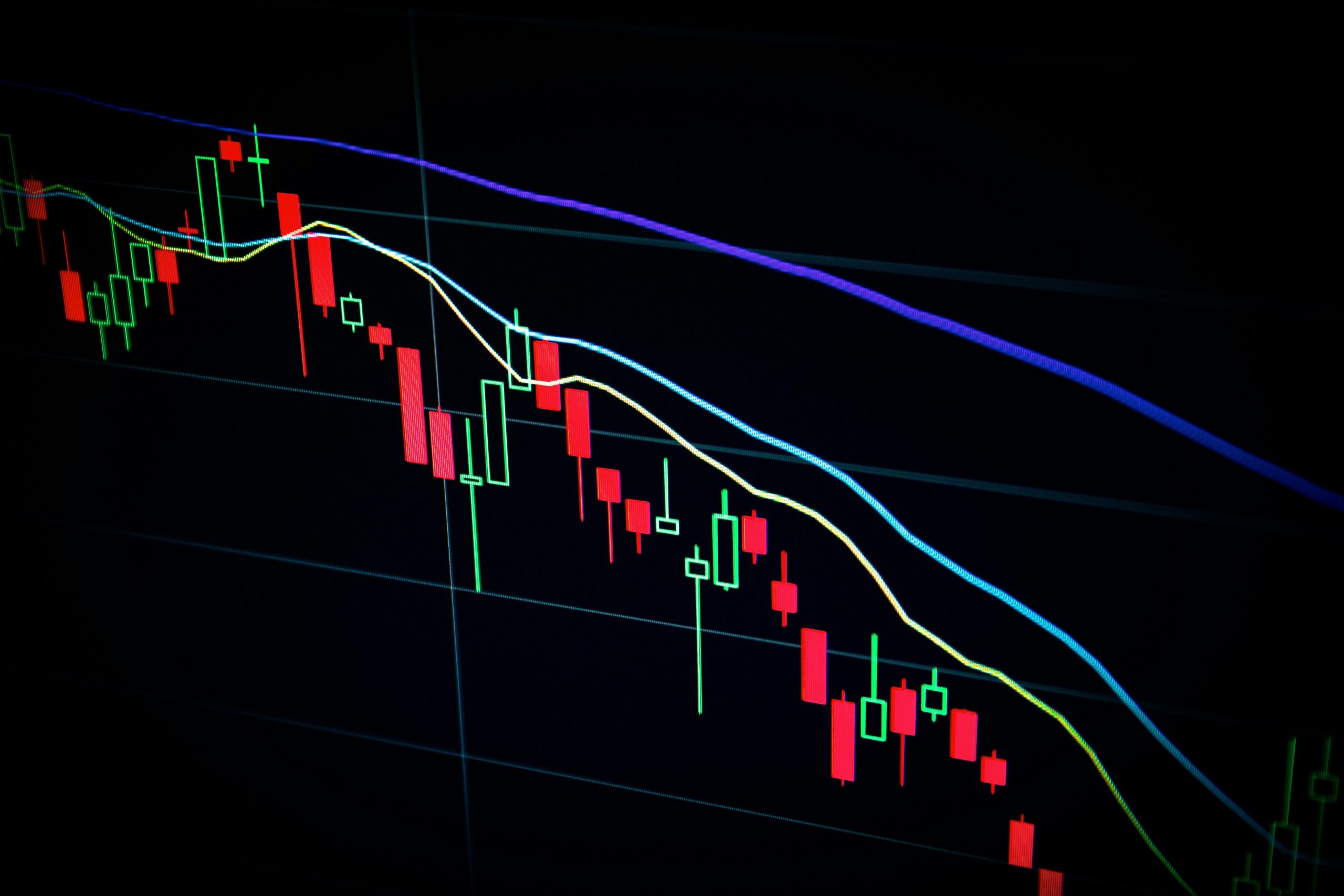
The stock market is often seen as a place driven by news, emotions, and economic events, but mathematics plays a much bigger role than many people realize. From predicting price movements to managing investment risks, mathematical concepts are at the heart of modern stock market trading.
One of the most important uses of mathematics in trading is data analysis. Traders and investors examine historical price data, trading volumes, and market trends using statistical methods. By calculating averages, percentages, and probabilities, they identify patterns that may indicate future price movements. Moving averages, for example, help smooth out daily price fluctuations and reveal long-term trends.
Probability is another essential mathematical tool. Since no one can predict the market with complete certainty, traders estimate the likelihood of different outcomes. This allows them to make informed decisions rather than relying on guesswork. Risk management techniques also depend on probability to determine how much capital should be invested in a single trade while minimizing potential losses.
Mathematics also powers algorithmic trading, where computers automatically buy and sell stocks based on predefined mathematical formulas. These algorithms analyze large amounts of market data within milliseconds and execute trades much faster than humans. Banks, hedge funds, and investment firms use advanced mathematical models to identify profitable opportunities and react quickly to changing market conditions.
Calculus and linear algebra are widely used in financial modeling. These branches of mathematics help analysts estimate the value of financial assets, measure price sensitivity, and optimize investment portfolios. The famous Black-Scholes model, for example, uses advanced mathematics to calculate the fair price of stock options.
Artificial intelligence and machine learning have further increased the importance of mathematics in trading. These technologies rely on mathematical algorithms to recognize complex market patterns, forecast trends, and improve decision-making over time.
In conclusion, mathematics is the foundation of successful stock market trading. Whether through statistics, probability, financial models, or automated algorithms, mathematical principles help traders make better decisions, reduce risk, and improve investment performance. While market movements can never be predicted with complete accuracy, mathematics provides the tools needed to analyze uncertainty and make informed financial choices in an increasingly competitive market.